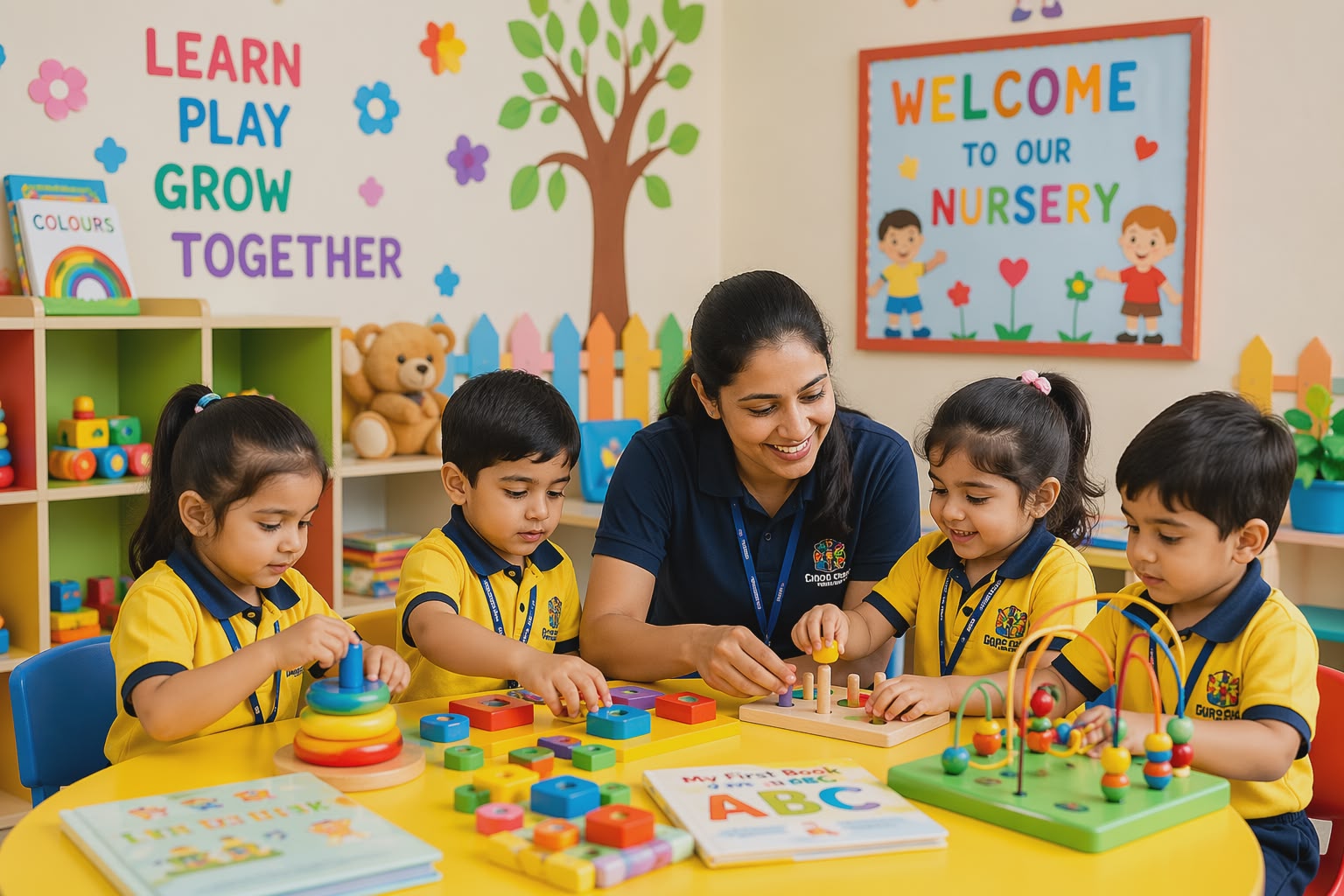
Nursery Education: A Strong Start for Your Child’s Future
Every parent wants the best for their child, especially when it comes to education. The early years of a child’s life are very important because this is when they learn the most. Nursery school is often the first step in a child’s learning journey outside the home. It is not just about studying, but about growing, exploring, and developing important life skills.
In this blog, we will understand what nursery education is, why it is important, and how it helps children build a strong foundation for the future.
What Is Nursery Education?
Nursery education is designed for children between the ages of 2.5 to 4 years. It is the first stage of formal learning before preschool and kindergarten. At this stage, children are introduced to a structured environment in a fun and playful way.
Nursery schools focus on activity-based learning. This means children learn through play, music, storytelling, and hands-on activities instead of traditional classroom teaching.
In a nursery class, children usually:
Play with toys and learning materials
Sing rhymes and songs
Listen to stories
Learn basic words and simple concepts
Interact with other children
The aim is to make children comfortable with learning while keeping them happy and engaged.
Why Is Nursery Education Important?
Many parents wonder if nursery school is really necessary. The answer is yes. Nursery education plays a key role in a child’s overall development.
1. Social Development
Nursery is often the first place where children meet other kids of their age. They learn how to share, take turns, and play together. These social skills are very important for their future.
2. Communication Skills
Children learn new words, songs, and expressions every day. They become better at speaking and understanding others.
3. Emotional Growth
Being away from parents for a short time helps children become more independent. They also learn how to manage emotions like happiness, fear, and excitement.
4. Physical Development
Activities like running, jumping, drawing, and playing help improve both fine and gross motor skills.
5. Cognitive Skills
Children start recognizing shapes, colors, numbers, and letters. Their thinking and problem-solving abilities also begin to develop.
What Do Children Learn in Nursery?
Nursery learning is simple, fun, and activity-based. It does not focus on pressure or heavy studies. Instead, it builds basic skills through enjoyable activities.
Some common things children learn include:
Alphabets (A to Z)
Numbers (1 to 10 or more)
Colors and shapes
Rhymes and songs
Basic manners like saying “please” and “thank you”
Simple instructions and routines
They also learn through creative activities like drawing, coloring, clay modeling, and dancing.
A Typical Day in a Nursery Class
A nursery classroom is full of energy and fun. Each day is planned in a way that keeps children interested and active.
A typical day may include:
Welcome time or morning greeting
Circle time (songs and rhymes)
Free play with toys
Storytelling session
Art and craft activities
Snack break
Outdoor play
Goodbye time
These activities help children learn while enjoying themselves.
Benefits of Nursery Education
Nursery education offers many benefits that go beyond academics.
1. Builds Confidence
Children become more confident when they interact with teachers and classmates.
2. Develops Routine
They learn to follow a daily routine, which helps in discipline.
3. Encourages Creativity
Art, music, and storytelling help children express their thoughts and imagination.
4. Prepares for School
Nursery prepares children for the next stages like preschool and kindergarten.
5. Promotes Independence
Children learn small tasks like packing their bags, eating on their own, and cleaning up.
How to Choose the Right Nursery School?
Choosing the right nursery is very important for your child’s comfort and growth. Here are some simple tips:
1. Safe Environment
Make sure the school is clean, secure, and child-friendly.
2. Qualified Teachers
Teachers should be caring, patient, and trained to handle young children.
3. Play-Based Learning
The school should focus more on play and activities rather than strict teaching.
4. Small Class Size
Smaller groups ensure that each child gets proper attention.
5. Positive Atmosphere
The environment should be warm, welcoming, and supportive.
6. Good Communication
Teachers should regularly update parents about the child’s progress.
Common Concerns of Parents
It is normal for parents to feel worried when sending their child to nursery for the first time.
1. My child cries when I leave
This is very common. Most children take a few days or weeks to adjust.
2. Is my child too young?
If your child is curious and active, they are ready to explore a nursery environment.
3. Will my child feel pressured?
Good nursery schools do not put pressure on children. Learning is always fun and relaxed.
Role of Parents in Nursery Education
Parents play a very important role in supporting their child’s nursery journey.
Encourage your child to talk about their day
Appreciate their small achievements
Maintain a routine at home
Be patient during the adjustment period
Stay connected with teachers
Your support helps your child feel secure and confident.
Conclusion
Nursery education is the first and one of the most important steps in a child’s learning journey. It helps children develop social, emotional, physical, and basic academic skills in a fun and engaging way. More than just learning letters and numbers, nursery teaches children how to interact, express themselves, and become independent.
Every child grows at their own pace, and it is important for parents to understand and support this journey. Choosing the right nursery school can make a big difference in shaping your child’s future.
Remember, the goal of nursery education is not to create pressure but to build a love for learning. When children enjoy learning from an early age, they grow into confident and happy individuals.
With the right environment, guidance, and love, your child can have a strong and positive start to their educational journey.
Back to All Blogs